
Why Ball Screws Cost More Than Lead Screws in Industrial Motion Systems
Why Ball Screws Cost More Than Lead Screws in Industrial Motion Systems
Ball screws and lead screws are both widely used in precision motion control systems.
However, ball screws generally come with a higher purchase cost due to their engineering structure, production requirements, and performance advantages.
This article explains the key reasons behind the cost difference and helps industrial buyers make more informed procurement decisions.
For many applications, selecting the right solution can directly influence system efficiency, service life, and long-term maintenance cost.
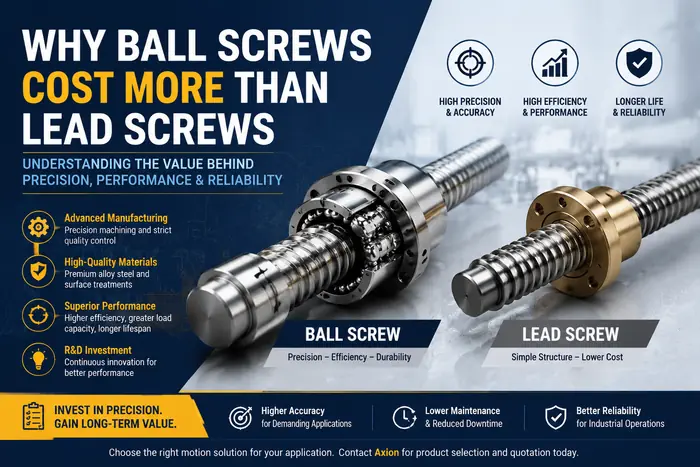
Key Manufacturing Factors Behind Higher Ball Screw Cost
Precision Engineering and Tight Tolerances
Ball screws require extremely precise machining to ensure smooth linear motion.
The manufacturing process involves grinding, hardening, and strict dimensional control.
Even minor deviations can affect load distribution and operational stability.
Complex Ball Recirculation Structure
Unlike lead screws, ball screws use a recirculating ball mechanism to reduce friction.
This structure requires carefully designed internal return paths for the steel balls.
The complexity of this system significantly increases production difficulty and cost.
Material Selection and Surface Treatment Requirements
High-Grade Alloy Steel Usage
Ball screws are manufactured using high-strength alloy steel to withstand heavy loads.
This material ensures better durability and resistance to wear under continuous operation.
Compared to standard screw materials, the raw cost is significantly higher.
Heat Treatment and Precision Grinding
Surface hardening improves fatigue resistance and extends service life.
Precision grinding ensures smooth contact between balls and raceways.
These additional processes add both time and production cost to each unit.
Performance Advantages That Justify the Cost
Higher Efficiency and Lower Energy Loss
Ball screws achieve much higher mechanical efficiency than lead screws.
Reduced friction means less energy is required for the same load movement.
This improves system performance in automated machinery and CNC applications.
Extended Service Life and Reduced Maintenance
Due to rolling contact instead of sliding friction, wear is significantly reduced.
This results in longer operational life and fewer maintenance interruptions.
For high-duty industrial systems, this reduces total lifecycle cost.
Research, Development, and Industrial Value
Continuous Engineering Improvements
Manufacturers continuously invest in improving accuracy, load capacity, and speed performance.
These R&D efforts contribute to higher production costs but deliver better long-term reliability.
Modern industrial systems increasingly demand high-precision motion components.
Conclusion: Cost vs Long-Term Industrial Value
Although ball screws have a higher initial cost compared to lead screws, their advantages in efficiency, precision, and durability often justify the investment.
For industries requiring stable motion control and long service life, selecting the right screw system is critical for operational success.
Axion provides industrial-grade motion components designed to support high-performance applications and stable long-term operation.
For technical selection support or quotation requests, users are encouraged to submit inquiries for professional assistance.
Why Ball Screws Cost More Than Lead Screws in Industrial Motion Systems
 Why Precision Ball Screws Are Critical for Industrial Automation and How to Choose a Trusted Supplie
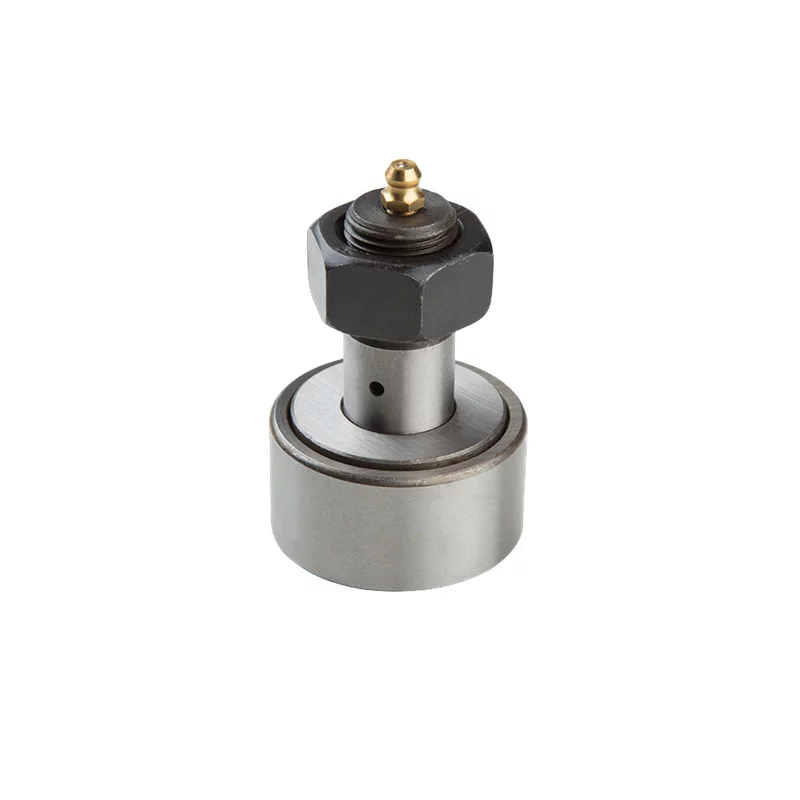 How to avoid roller bearing failures
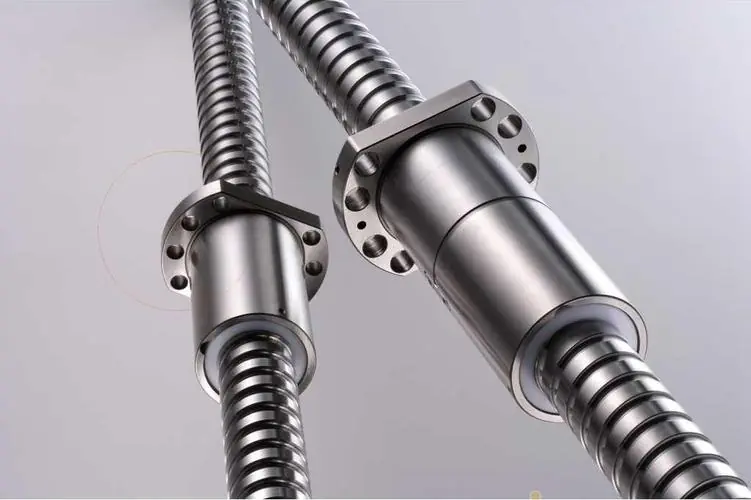 Why Precision Ball Screws are Vital for Industrial Automation and How to Choose the Right Supplier
Related Products
-
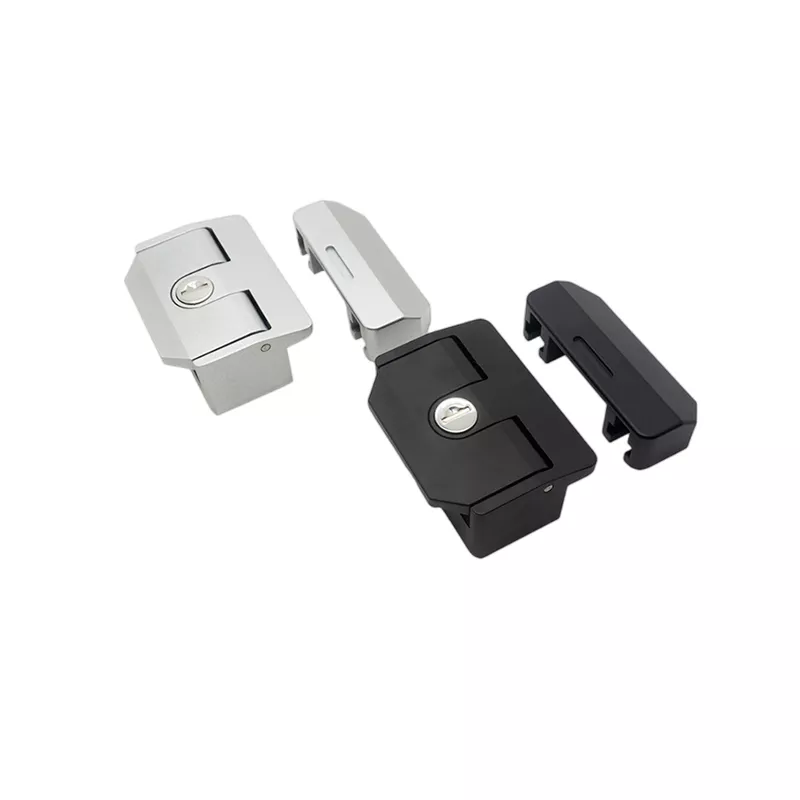
Black Large Slam Door Latch with Internal Release
-
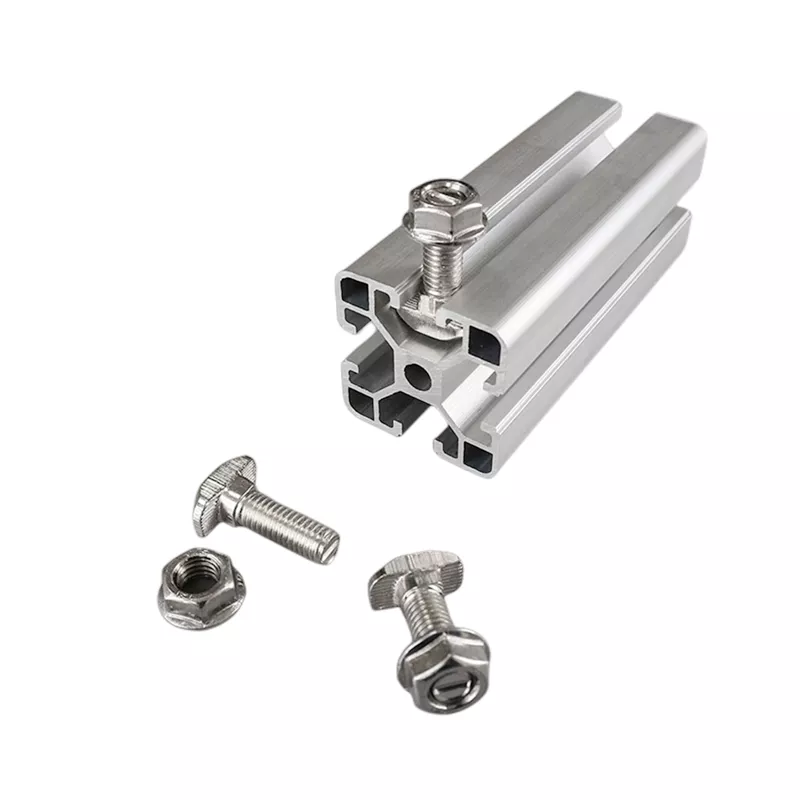
Stainless Steel Serrated Hex Flange Nut
-
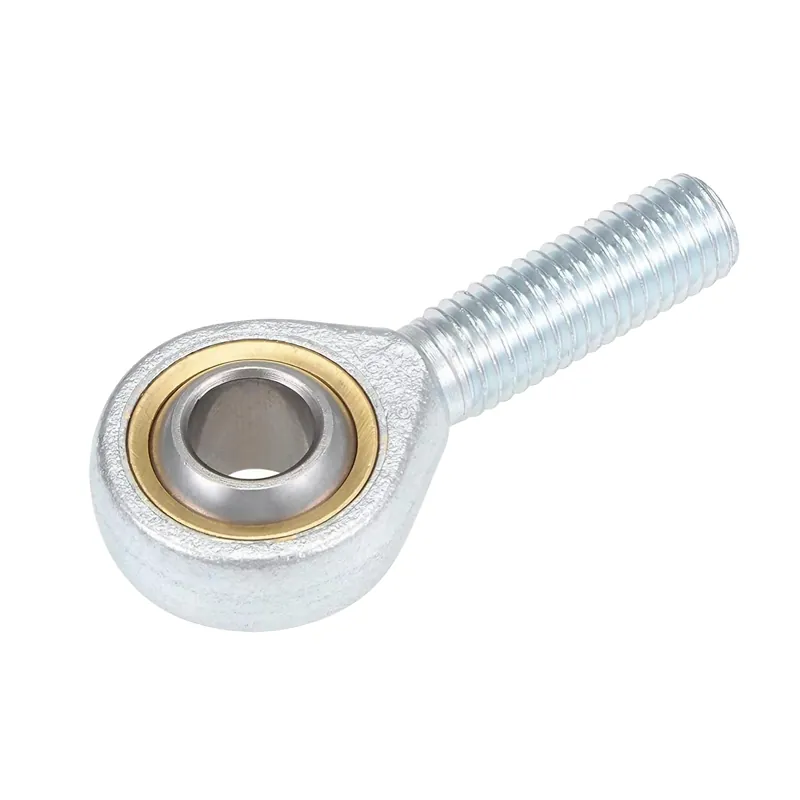
M10 M12 M16 Male Rod Ends
-
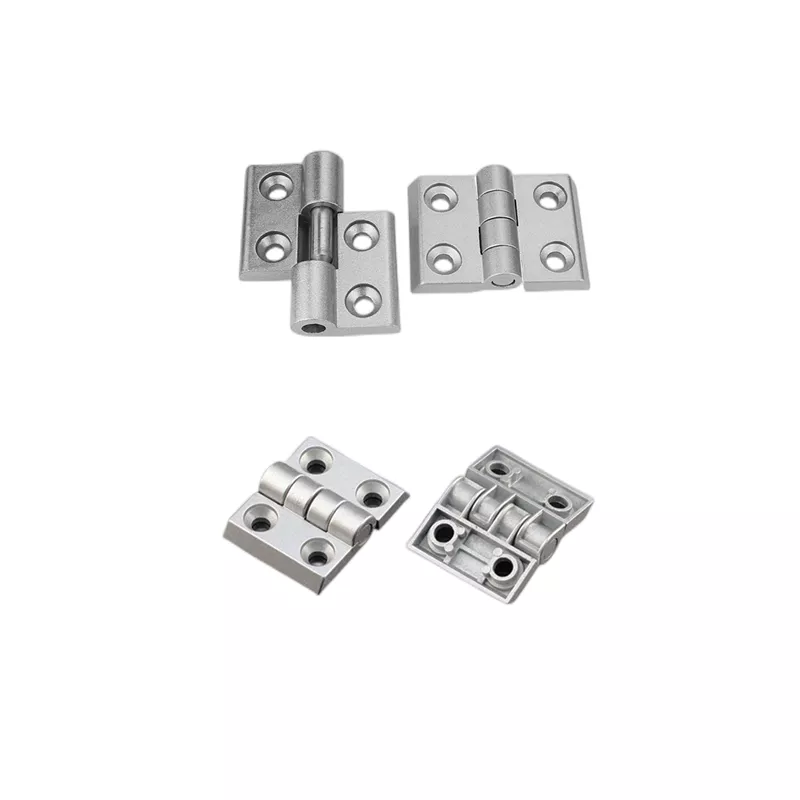
Aluminum Door hinge for 3030 4040 4545 Profile Aluminum
-
EGW-SB/EGH-CB,Linear Motion,Linear Guideways
-
SFA Series,Ball Screw
-
SI...T/K Series,Female Threaded - Rod End Bearing
-
GTHA Series,Ball Screw
-
3 Way Aluminium Profile 2020 Angle Corner Bracket
-
RGW-CC/RGW-HC,Linear Motion,Linear Guideways
-
stainless steel black hex socket grub screw
-
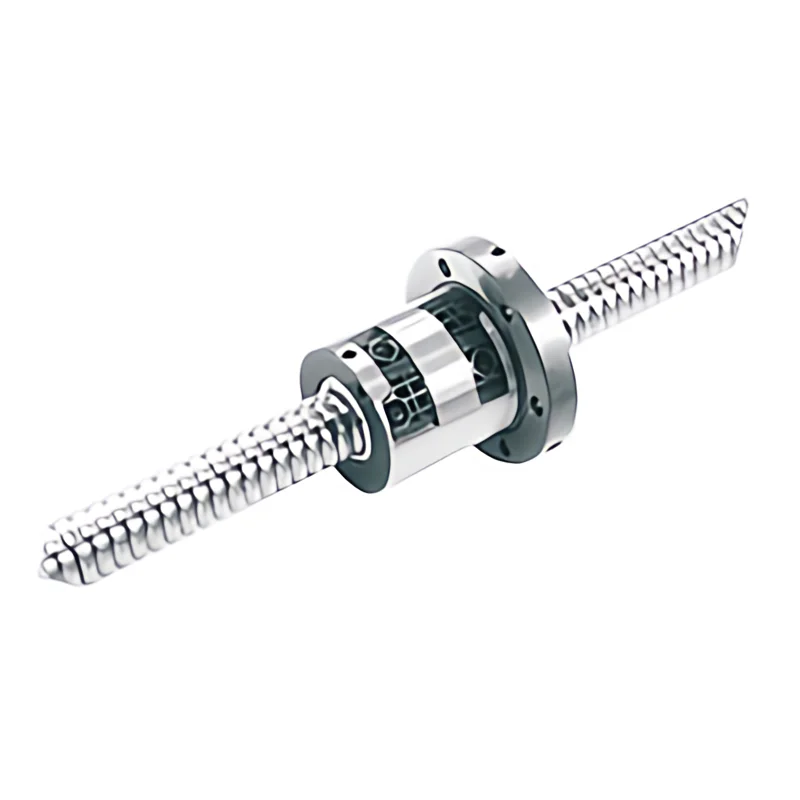
SFV Series,Ball Screw
-
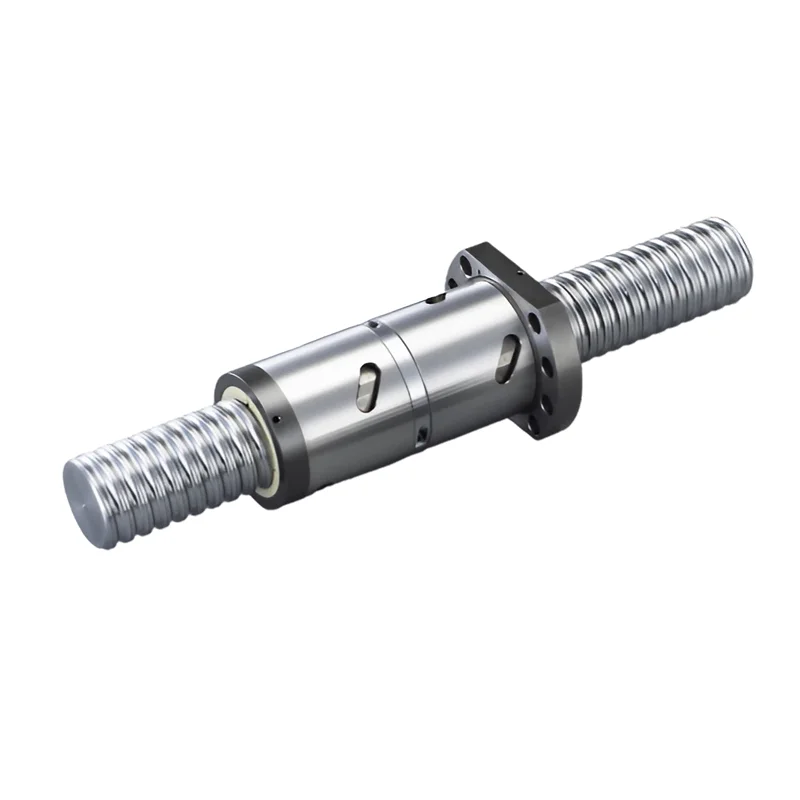
DFU Series,Ball Screw
-
SI...E Series,Female Threaded - Rod End Bearing
-
2020/4040 Aluminum Extrusion Floor Mount Base Plate
-
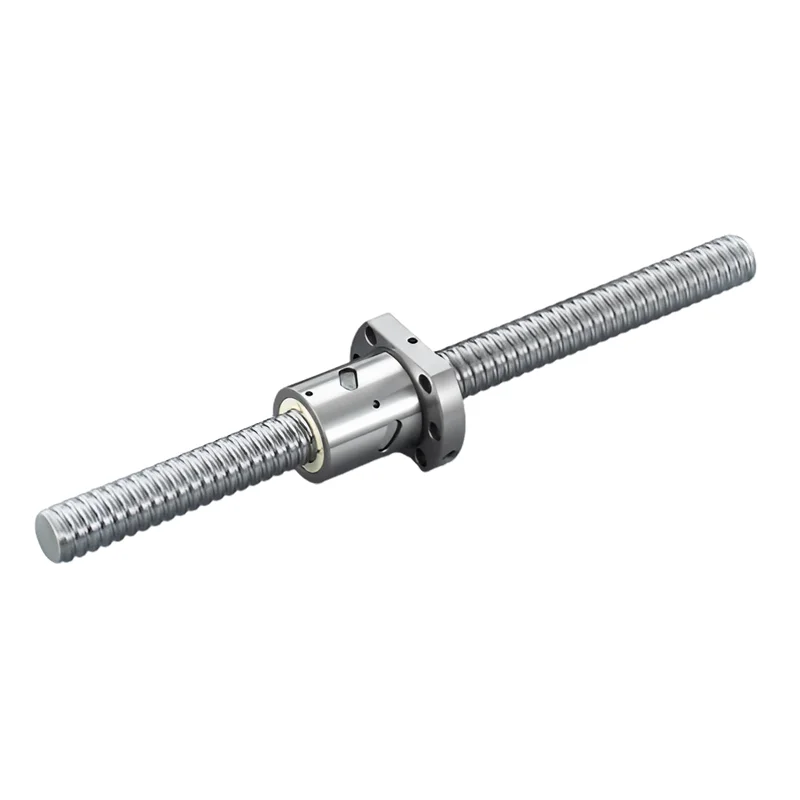
SFU Series,Ball Screw