
Why Precision Ball Screws Are Critical for Industrial Automation and How to Choose a Trusted Supplier
The Fundamental Role of Ball Screws in Modern Automation
Industrial automation systems demand motion components that deliver both speed and micron-level positional accuracy.
Ball screws directly address this requirement by converting rotary motor torque into smooth, friction-reduced linear displacement.
Unlike conventional lead screws, ball screws incorporate recirculating ball bearings between the screw shaft and the nut.
This rolling-element design slashes friction to a fraction of that seen in sliding-contact threads.
As a result, machines achieve higher feed rates, lower heat generation, and consistently repeatable positioning over millions of cycles.
Without ball screws, advanced CNC machining, robotic assembly, and semiconductor fabrication would struggle to meet today’s tight tolerances.
Why Low Starting Torque Directly Impacts Production Efficiency
Starting torque determines how much energy a motor must expend to initiate movement from a standstill.
Ball screws exhibit extremely low starting torque because the balls roll rather than slide.
This characteristic allows servo motors to accelerate rapidly without oversizing, reducing both capital and operational electricity costs.
For high-duty-cycle applications, the cumulative energy saving can reach 30–40% compared to acme or trapezoidal screws.
Additionally, lower torque ripple translates to smoother axis motion, which is indispensable for finishing operations like grinding or laser engraving.
Material Engineering: The Backbone of Long-Term Reliability
Every ball screw’s service life hinges on the metallurgical choices made during manufacturing.
At Ningbo SAIVS Machinery Co., Ltd., we select chromium-molybdenum alloy steel for the screw shaft because of its superior hardenability and fatigue resistance.
This material withstands repeated contact stresses that would deform lower-grade steels in a matter of weeks.
For the ball nut, we use hardened bearing-grade steel or precision-machined brass, depending on the load and speed profile.
Brass nuts offer excellent emergency-stop load capacity and low friction, while steel nuts provide maximum rigidity for heavy-duty milling tables.
Stainless Steel Options for Harsh and Hygienic Environments
Standard alloy steels are vulnerable to corrosion from coolants, washdown chemicals, or ambient humidity.
For pharmaceutical filling lines, food processing conveyors, and medical imaging systems, we supply full stainless-steel ball screws.
These products undergo passivation treatment to resist pitting and crevice corrosion even under periodic sterilization with hydrogen peroxide or steam.
The dimensional stability of stainless grades also ensures that calibration settings remain valid over years of service.
Customers in wet or cleanroom environments consistently report that our stainless ball screws outlast coated carbon-steel alternatives by a factor of three.
Standard Lengths and Customization Flexibility
Our most requested stock lengths are 1500 mm, 2500 mm, and 3000 mm, which cover the majority of gantry, lift, and actuator applications.
However, we recognize that many machines require non-standard travel distances or special end-machining.
SAIVS offers complete customization—from shaft diameter and lead pitch to nut flanges and wiper seals.
We also provide pre-loaded double nuts for zero-backlash systems, essential for high-precision contouring operations.
Performance Metrics That Matter to Engineers and Procurement Teams
Efficiency ratings for ball screws typically reach 90% or higher, compared to 50–60% for plain lead screws.
This efficiency is not a theoretical number; it directly reduces motor size, gearbox stress, and cooling requirements.
Positioning repeatability of ±0.005 mm is achievable with standard ground ball screws, and ±0.002 mm with our ultra-precision grades.
Such repeatability enables automated inspection systems to sort parts with near-zero false rejects.
Service life, expressed in L10 rating (millions of revolutions), often exceeds 20 million for properly sized and lubricated units.
We back these figures with actual test data from our in-house dynamometer lab, which mimics real-world load cycles.
Why Engineers Consistently Specify Ball Screws Over Other Actuators
Linear motors and belt drives have their niches, but they cannot match the stiffness-to-size ratio of a ball screw.
Ball screws provide inherent mechanical advantage, allowing small motors to push heavy loads without gear reducers.
They also exhibit negligible backlash when pre-loaded, a critical factor for contouring and interpolation in 5-axis machining.
Maintenance is straightforward—periodic re-greasing and occasional wiper replacement keep them running for decades.
For these reasons, over 80% of new CNC machine tools and robotic arms specify ball screws as the primary linear actuator.
Selecting the Right Supplier: Beyond Price and Delivery
Many suppliers offer ball screws, but the difference lies in process control, traceability, and application engineering support.
SAIVS operates ISO 9001-certified production lines with 100% inspection of lead accuracy, hardness, and surface roughness.
Every unit ships with a dimensional inspection report, so your quality team can validate conformance immediately upon receipt.
We maintain a dedicated technical helpdesk that assists with sizing calculations, life predictions, and lubrication recommendations.
This level of service is particularly valuable for OEMs developing new product lines, where design changes are frequent and deadlines are tight.
Factory-Direct Pricing and Global Logistics Advantages
By manufacturing in-house, we eliminate intermediary markups without compromising material grades or heat-treatment protocols.
Our pricing structure is transparent—volume discounts are clearly defined, and there are no hidden tooling charges for standard modifications.
We partner with major freight carriers to offer expedited shipping to North America, Europe, and Southeast Asia within 5–7 working days.
For urgent breakdown replacements, we maintain buffer stock of popular sizes in our overseas warehouses.
Technical Support That Continues After the Sale
Installation guidance, torque specifications, and maintenance schedules are provided in every shipment.
Our engineers are available for remote video troubleshooting, and we offer on-site training for large-scale projects.
Warranty claims are processed swiftly because we keep full batch records, enabling root-cause analysis and corrective actions.
Why SAIVS Is the Partner of Choice for Automation Professionals
We do not simply sell components; we deliver motion solutions that enhance your machine’s overall equipment effectiveness (OEE).
Our ball screws have been validated in aerospace fastening systems, automotive transfer lines, and high-speed pick-and-place machines.
Customers repeatedly cite our consistency—the same product performs identically on batch one and batch one hundred.
This reliability reduces your inventory risk and simplifies your supply chain management.
Request a Custom Quote or Engineering Consultation
Whether you are retrofitting an aging mill or designing a next-generation collaborative robot, SAIVS has the right ball screw configuration for your parameters.
Provide us with your stroke, load, speed, and duty cycle, and we will return a detailed proposal within 24 hours.
We also offer sample units for on-machine testing, with the test cost credited against your first production order.
Contact our sales team directly through the website or email to initiate the discussion.
Let us show you how precision ball screws can elevate your automation performance while reducing total cost of ownership.
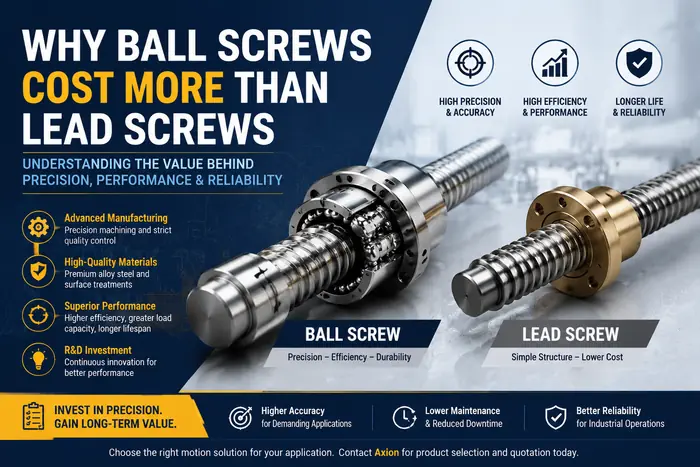 Why Ball Screws Cost More Than Lead Screws in Industrial Motion Systems
Why Precision Ball Screws Are Critical for Industrial Automation and How to Choose a Trusted Supplie
Why Ball Screws Cost More Than Lead Screws in Industrial Motion Systems
Why Precision Ball Screws Are Critical for Industrial Automation and How to Choose a Trusted Supplie
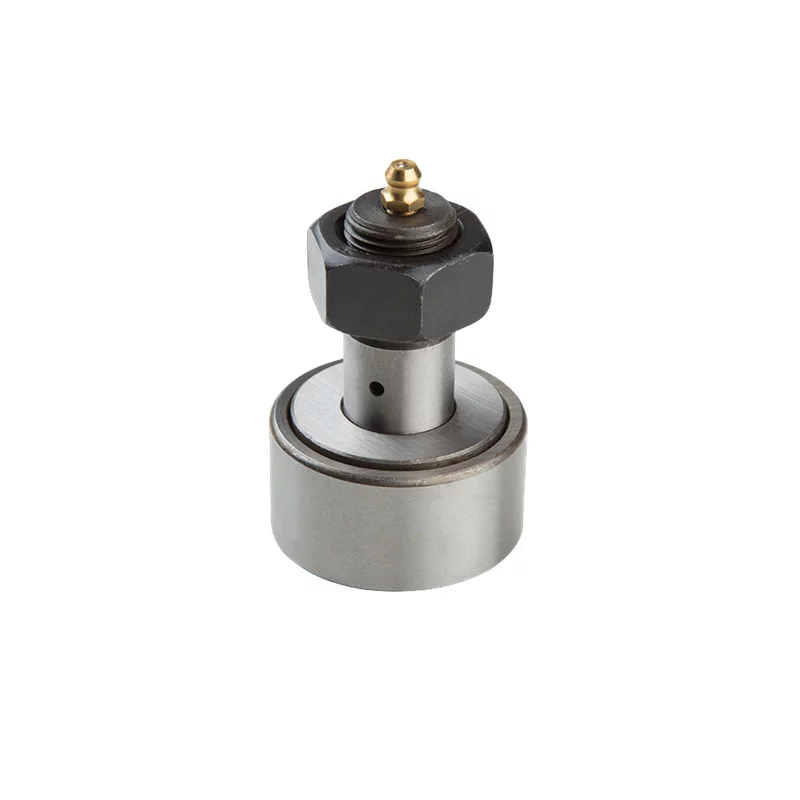 How to avoid roller bearing failures
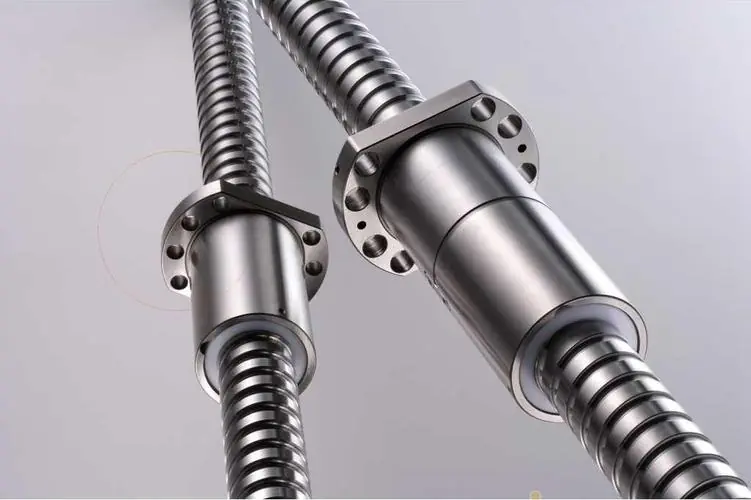 Why Precision Ball Screws are Vital for Industrial Automation and How to Choose the Right Supplier
Related Products
-
Door Handle Aluminium Profile Handle Cabinet Furniture Handle
-
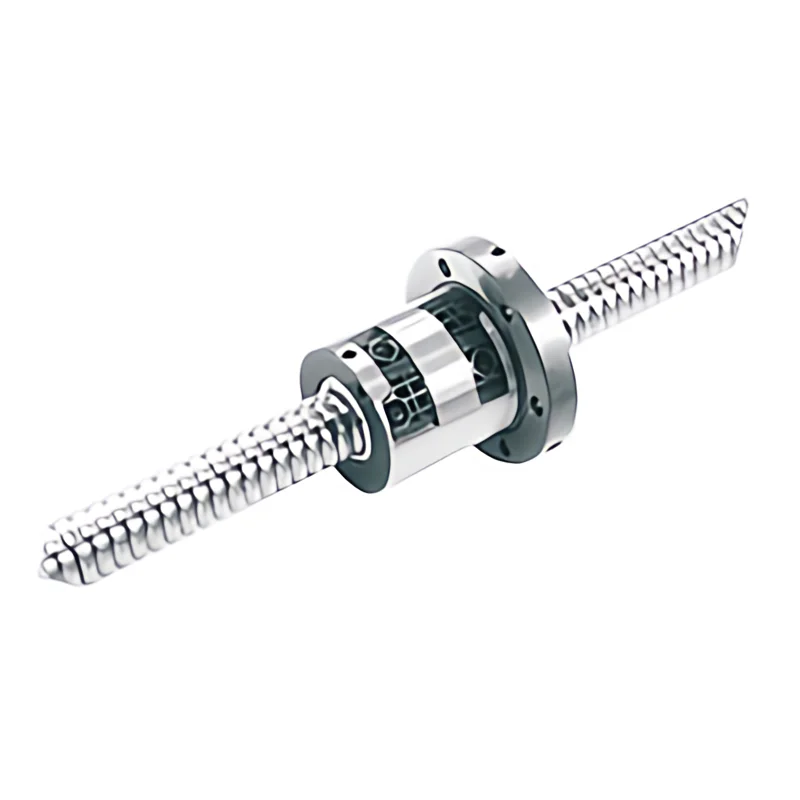
SFV Series,Ball Screw
-
304 stainless steel M10 Furniture adjustable leg levelling feet
-
8 slot locking t nut steel M5/M6/M8 thread t slot nut with spring leaf
-
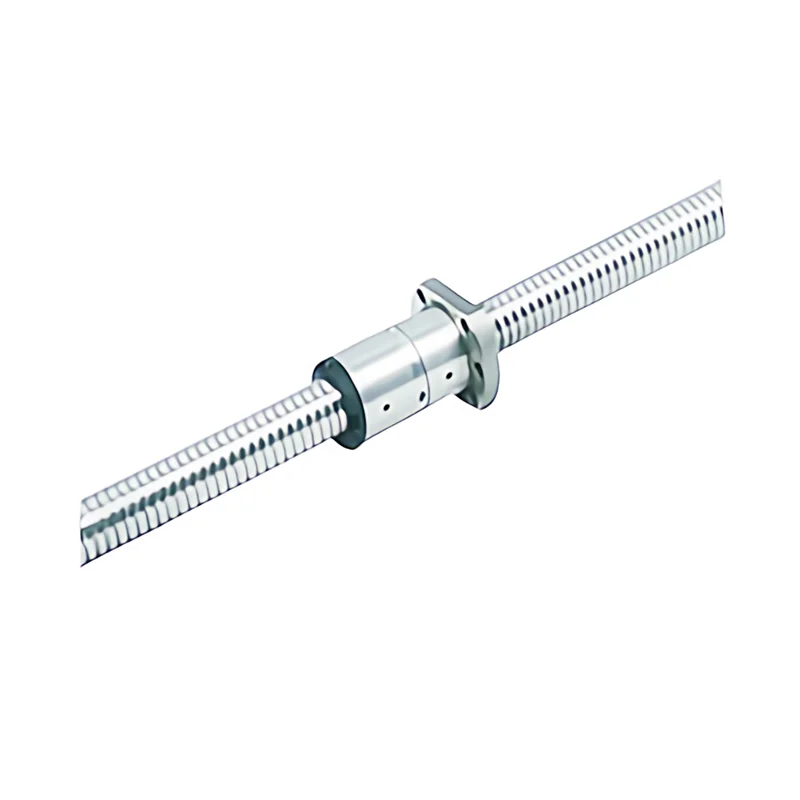
DFS Series,Ball Screw
-
679CJ,Rod Ends,Hydraulic Components
-
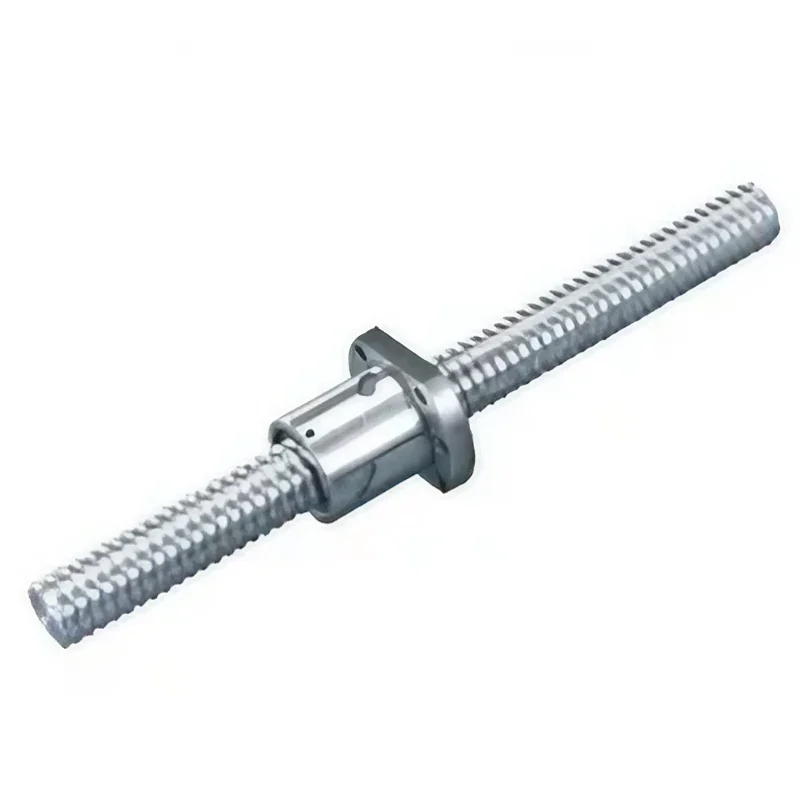
SFNU Series,Ball Screw
-
SBR Series,Linear Guide
-
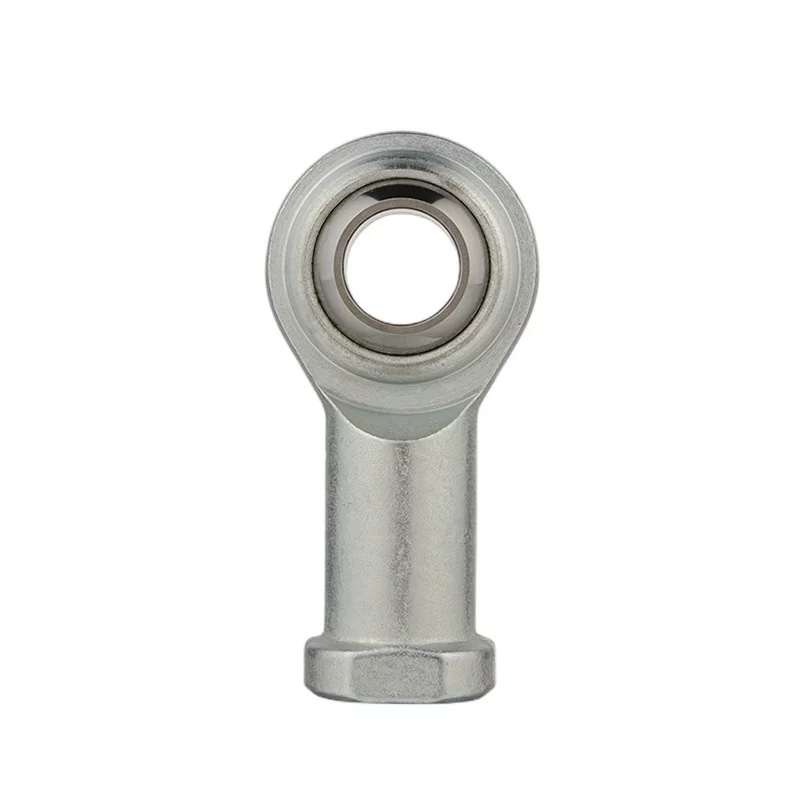
NHS...T Series,Female Threaded - Rod End Bearing
-
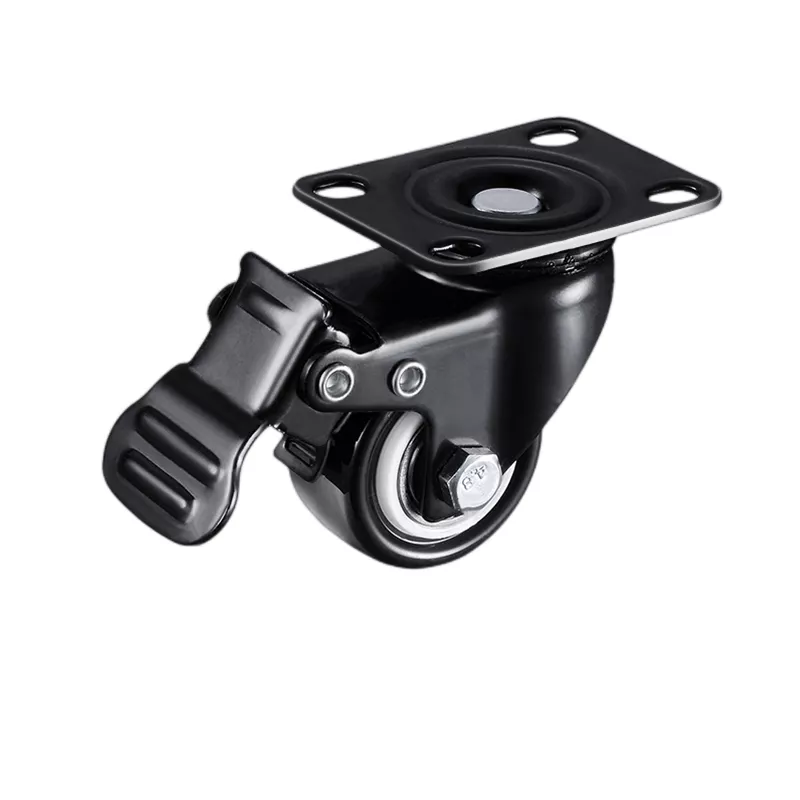
heavy duty office chair polyurethane rubber caster wheel
-
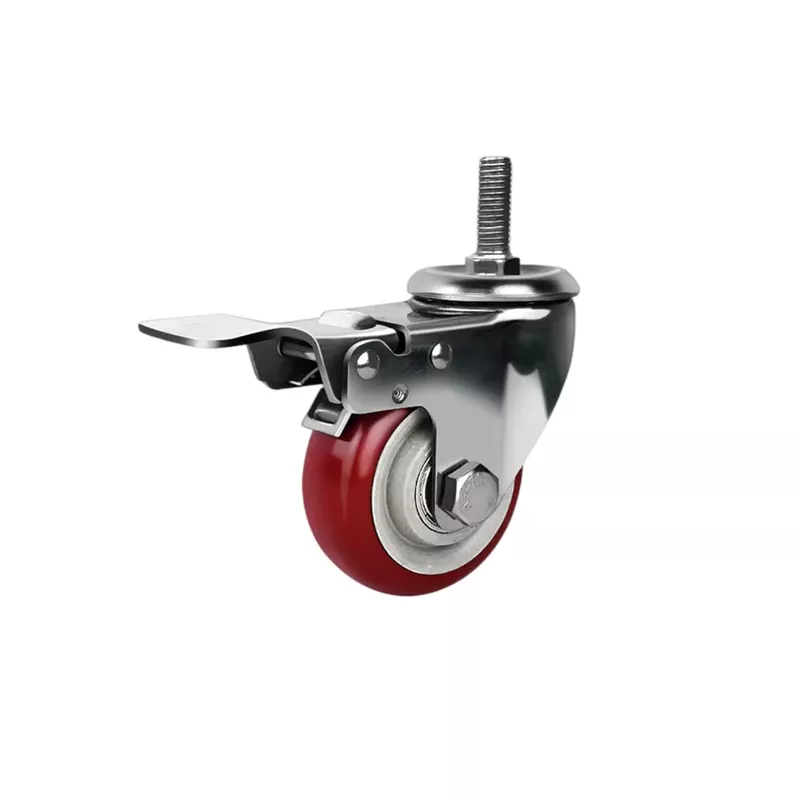
Trolley Rack Casters Wheels Heavy Duty PVC/PU Castor
-
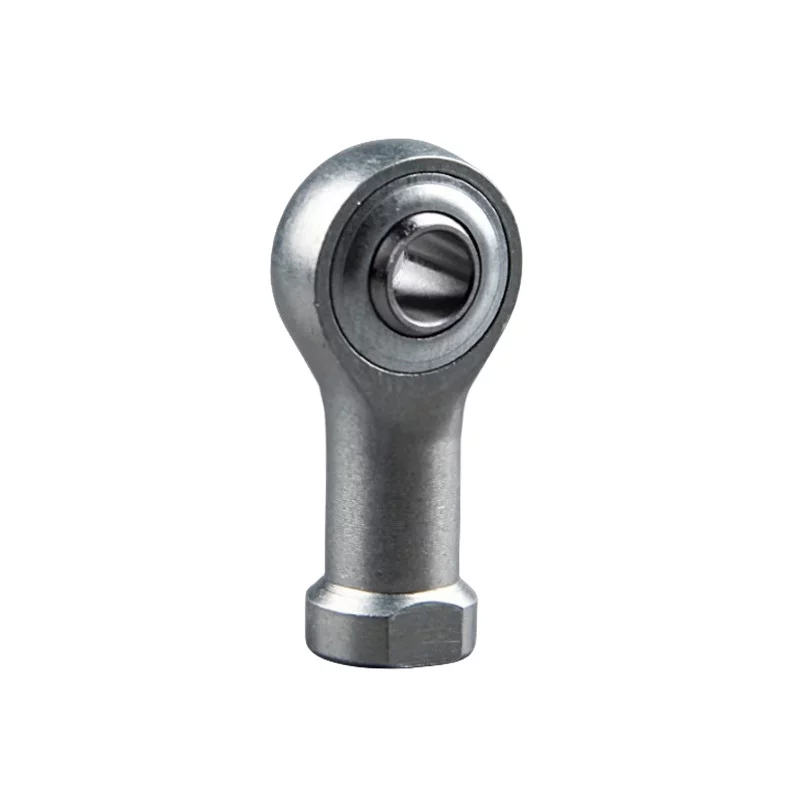
BRF Series,Female Threaded - Rod End Bearing
-
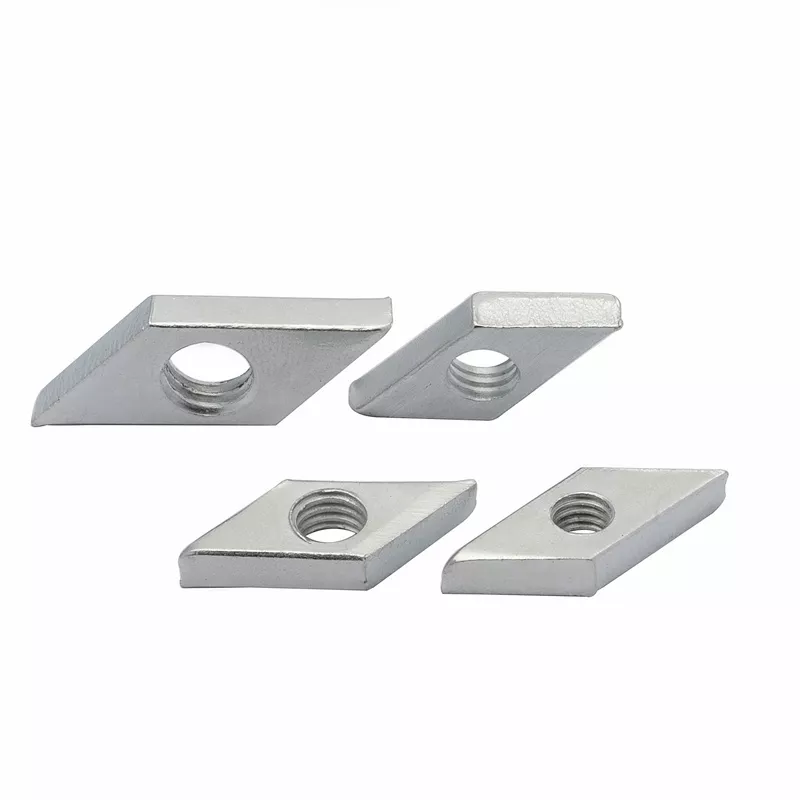
Steel Die-cast Zinc Rhombus Round Slotted Threaded Nut
-
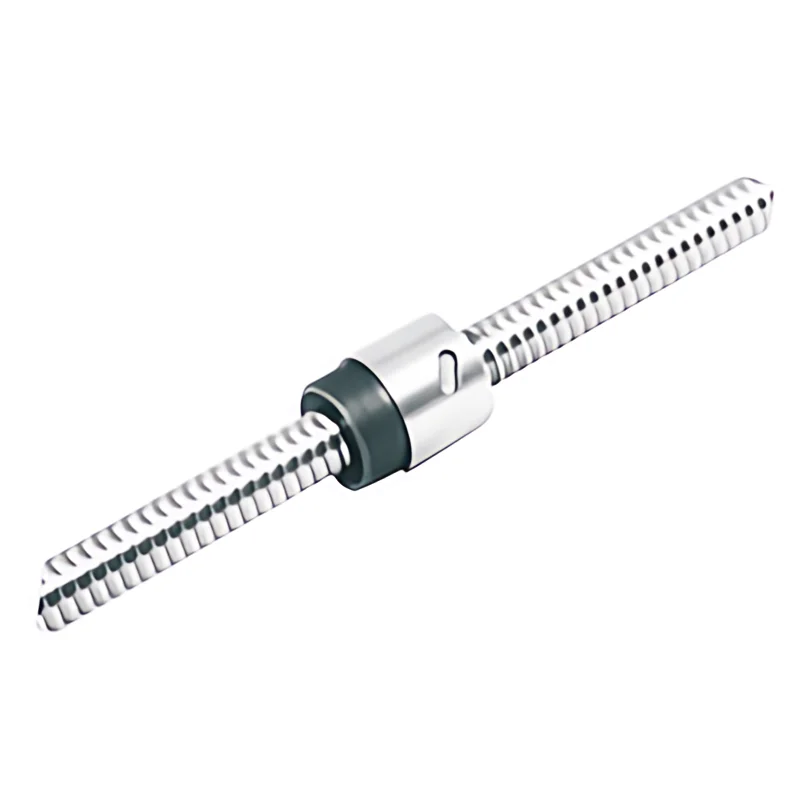
BSH Series,Ball Screw
-
Stainless steel adjustable bending door handles for aluminium profile
-
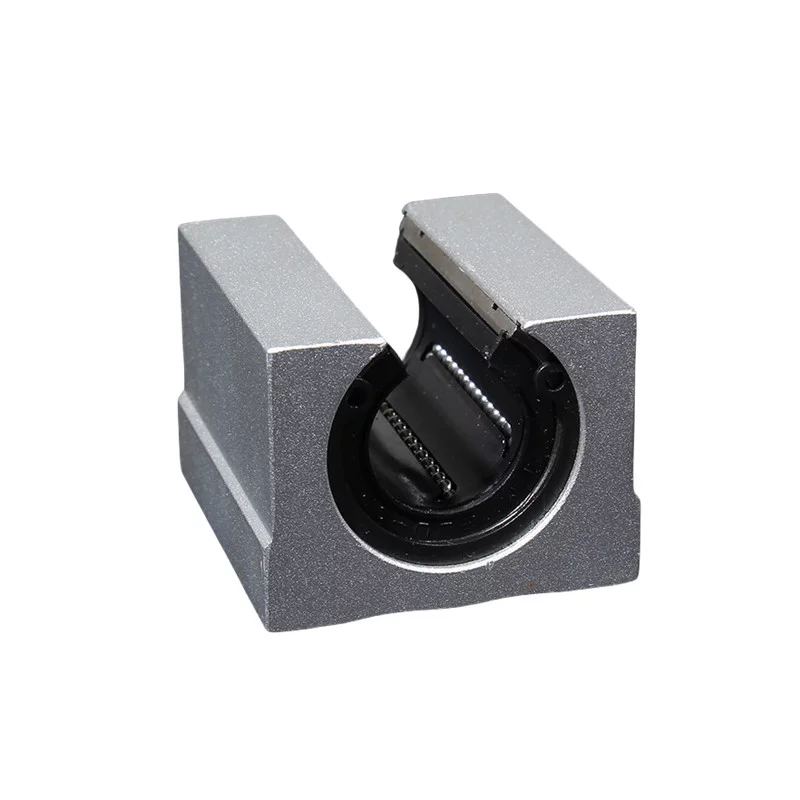
SBR..UU Series,Linear Motion Ball Slide Units